What started in March 2025 as a 25% tariff on Canadian goods has escalated into the most serious trade conflict between Canada and the United States in generations. As of August 2026, the U.S. has imposed 50% tariffs on a broad range of Canadian exports, including goods that comply with the Canada-U.S.-Mexico Agreement (CUSMA), with no scheduled end date. Trade negotiations between the two governments have been paused, and Canada has announced dollar-for-dollar counter-tariffs on more than 700 U.S. products, taking effect September 8, 2026.
The Ontario Chamber of Commerce is tracking these developments in real time and connecting members to the resources, government programs, and advocacy channels they need to respond.
This page is reviewed and updated as tariff measures change. Bookmark it and check back regularly, or click here to subscribe to our newsletter.
Is Your Business Impacted?
Federal & Provincial Support Programs
Provincial Programs & Supports
- Who Program Supports: Ontario SMEs investing to diversify markets, increase production, strengthen local supply chains, reshore activities or reduce tariff exposure.
- Program Requirements: Eligible applicants must be for-profit businesses operating in Ontario that are undertaking a project to address the impacts of U.S. trade disruptions. To qualify, businesses must invest at least $200,000 in eligible project costs and complete their project within two years. Projects should support objectives such as expanding into new markets, strengthening local supply chains, improving competitiveness, or increasing resilience to trade-related challenges.
Protect Ontario Financing Program
- Who Program Supports: Tariff-impacted businesses requiring loans to cover working-capital expenses such as payroll, leases and utilities.
- Program Requirements: The program covers businesses directly exporting or participating in supply chains affected by Section 232 or Section 338 tariffs. Applicants generally need at least $2 million in annual revenue, 10 full-time Ontario employees and three years of operating history.
Trade-Impacted Communities Program
- Who Program Supports: Sector associations, economic-development organizations, municipalities, and business accelerators or incubators delivering broader assistance to tariff-affected industries.
- Program Requirements: Individual private-sector businesses and chambers cannot apply directly, although they may participate as project partners.
Federal Programs & Supports
Regional Tariff Response Initiative (Government of Canada)
- Who Program Supports: Provides funding to help tariff-impacted small and medium-sized businesses improve productivity, diversify markets, strengthen supply chains, and adapt to trade disruptions. The program is delivered through regional development agencies, including FedDev Ontario (Southern Ontario) and FedNor (Northern Ontario)
- Program Requirements: Businesses should complete the self-screening process before submitting the application and supplementary forms.
- Who Program Supports: Canadian SMEs facing tariff-related cash-flow pressure or financing investments in equipment, productivity, supply-chain adaptation and market diversification.
- Program Requirements: The program offers financing of up to $5 million. General requirements include at least $1 million in annual revenue, three years in business and historically positive cash flow.
Work-Sharing Program: Tariff Special Measures
- Who Program Supports: Employers experiencing a temporary reduction in business activity that want to retain employees and avoid layoffs by temporarily reducing working hours.
- Program Requirements: Through the program, employees agree to work reduced hours and share available work while receiving income support, helping businesses retain skilled workers until normal operations resume.
Canada Strong: Government Support Programs for Workers, Businesses and Industries
- Features information about a broad range of programs, resources and support measures for business/industry, workers, and employers.
What You Should Know
Duty Drawback & Remission
These are two different tools, and it’s worth knowing which one applies to you:
- Duty Drawback Program — a refund of duties already paid on imported goods that are later exported, or used as inputs in goods you export. File Form K32 with supporting documentation through the CBSA Assessment and Revenue Management (CARM) client portal.
- Duties Relief Program — relief granted up front, before duties are paid, rather than refunded after. File Form K90 (Duties Relief Application) through CARM; goods generally must be exported within 4 years.
- Remission Orders — targeted relief for specific surtaxes (for example, the United States Surtax Remission Order covering steel, aluminum, and motor vehicle-related goods), usually tied to a specific eligible end use such as manufacturing, food and beverage packaging, agricultural production, or public health/safety. Claims must generally be filed within two years of importation.
- General inquiries: CBSA Border Information Service — 1-800-461-9999 (from Canada).
Trade Diversification
With U.S. market access more expensive and less predictable, diversifying export markets is one of the few levers fully within a business’s control. Resources to start with:
- Trade Commissioner Service (TCS) — Canada’s global network of trade commissioners can help identify buyers, distributors, and partners in new markets, and connect you with in-market support before you commit resources.
- CanExport — funding programs that help SMEs offset the cost of pursuing new export opportunities (market research, travel, trade show participation, and adaptation of marketing materials for new markets).
- Team Canada Trade Missions — organized group missions to specific international markets, often paired with sector-specific programming.
- Canada’s wider free trade agreement network — beyond CUSMA, Canada has agreements including CETA (European Union) and CPTPP (Asia-Pacific), which can offer preferential access to markets many exporters haven’t yet explored.
De Minimis Change — What SMEs Need to Know
This already happened, and it’s easy to miss if you haven’t shipped to the U.S. recently. Effective August 29, 2025, the United States eliminated de minimis (duty-free) treatment for low-value shipments. Previously, any shipment under US$800 could enter the U.S. duty-free with minimal paperwork. That exemption is gone for every country of origin, was made indefinite by regulation in mid-2026, and there is no dollar threshold below which a shipment is exempt today.
What this means in practice for Ontario SMEs selling direct to U.S. customers (e-commerce, Etsy/Shopify-type storefronts, small parcel exports):
- Every shipment now requires a formal or informal U.S. customs entry, regardless of value.
- Applicable duties, taxes, and fees apply from the first dollar. You must build this into your U.S.-facing pricing rather than absorbing it as a surprise cost.
- Expect more paperwork and processing time per shipment; courier and postal partners have adjusted their intake processes, so confirm your current shipping provider’s process rather than assuming older guidance still applies.
- Returns from U.S. customers are also affected — a returned item may need to be tracked with the same documentation rigour as the original outbound shipment to avoid double duty charges.
- If volumes are meaningful, a customs broker or a trade compliance platform can reduce the per-shipment administrative burden.
From the Trade & Competitiveness Policy Council
Recent Advocacy
The Ontario Chamber’s Trade & Competitiveness Policy Council brings together business, chamber, and sector leaders to advocate on exactly these issues. Impact reports submitted on this page feed the Council’s evidence-based recommendations to government.
Click here to learn more about of all of the OCC’s policy councils and how you can join.
News Updates
New from the Ontario Chamber of Commerce
- September 8, 2026, Ontario Chamber Calls for De-escalation, Focus on Competitiveness as Canada-U.S. Trade Tensions Enter New Phase
- September 1, 2026, Opinion: Michigan needs Canada to compete, so we must do what we can
- August 31 2026, Canada’s provincial chambers welcome progress on internal trade, urge governments to turn commitments into results
- August 25, 2026, Ontario Chamber Welcomes Tariff Support, Calls for a Competitive Canada and Targeted Countermeasures
- August 22, 2026, Ontario Chamber Supports Federal and Provincial Government Position on U.S. Trade
- July 20, 2026, Ontario Chamber of Commerce Responds to U.S. Tariff Escalation
- July 16, 2026, Ahead of World Cup Final, Ontario and New York Business Leaders Call for a Winning North American Trade Partnership
- July 1, 2026, Ontario Chamber of Commerce calls for continued negotiations on CUSMA renewal
- June 30, 2026, Ontario and Michigan Chambers Urge Swift Renewal as CUSMA Review Approaches
- June 24, 2026, Ontario Chamber of Commerce establishes Trade & Competitiveness Council ahead of CUSMA review
- May 4, 2026, Ontario Chamber: Federal Government Responds to Business Calls with New Tariff Support
- April 27, 2026, Businesses Call for Urgent Action on Expanded U.S. Tariffs at Ontario Chamber AGM
- March 27, 2026, Ontario business leaders head to Washington ahead of CUSMA review
- February 20, 2026, Ontario Chamber of Commerce Welcomes U.S. Supreme Court Ruling on U.S. Tariffs
News from the Government of Ontario
Read all news from the Government of Ontario
- September 10, 2026, Ontario Funding 40,000 New Postsecondary Seats to Prepare Students for In-Demand Careers
- August 24, 2026, Canadian Exports Eligible for Support Through the Protect Ontario Financing Program
- June 9, 2026, Ontario Launches Fortress North America Plan
- April 30, 2026, Ontario Expanding and Diversifying International Trade Links
- March 10, 2026, Ontario and Canada Investing More Than $228 Million to Protect Workers and Key Industries
News from the Government of Canada
Read all news from the Government of Canada
- August 25, 2026, Canada announces targeted countermeasures and substantive support for workers and businesses in response to U.S. tariffs
- August 18, 2026, Statement by Prime Minister Carney on ongoing Canada-U.S. trade negotiations
- July 31, 2026, Canada imposes provisional safeguard tariff on imports of wood cabinets and vanities to protect Canadian manufacturers and workers
- July 24, 2026, Canada and United Arab Emirates conclude Comprehensive Economic Partnership Agreement negotiations
- June 20, 2026, Minister Sidhu to lead the largest ever Team Canada Trade Mission to the Indo-Pacific region to unlock new opportunities for Canadian businesses in Japan
- June 3, 2026, Canada to extend steel and aluminum tariff measures to support workers and businesses
- May 4, 2026, Government of Canada announces a new $1 billion Business Development Bank of Canada program and $500 million in additional funding for the Regional Tariff Response Initiative
- April 28, 2026, Spring Economic Update 2026
- February 13, 2026, Minister LeBlanc to lead Team Canada Trade Mission to Mexico to deepen North American trade ties
- January 21, 2026, Prime Minister Carney builds resilient partnerships and attracts new investments at the World Economic Forum Annual Meeting
Additional Resources
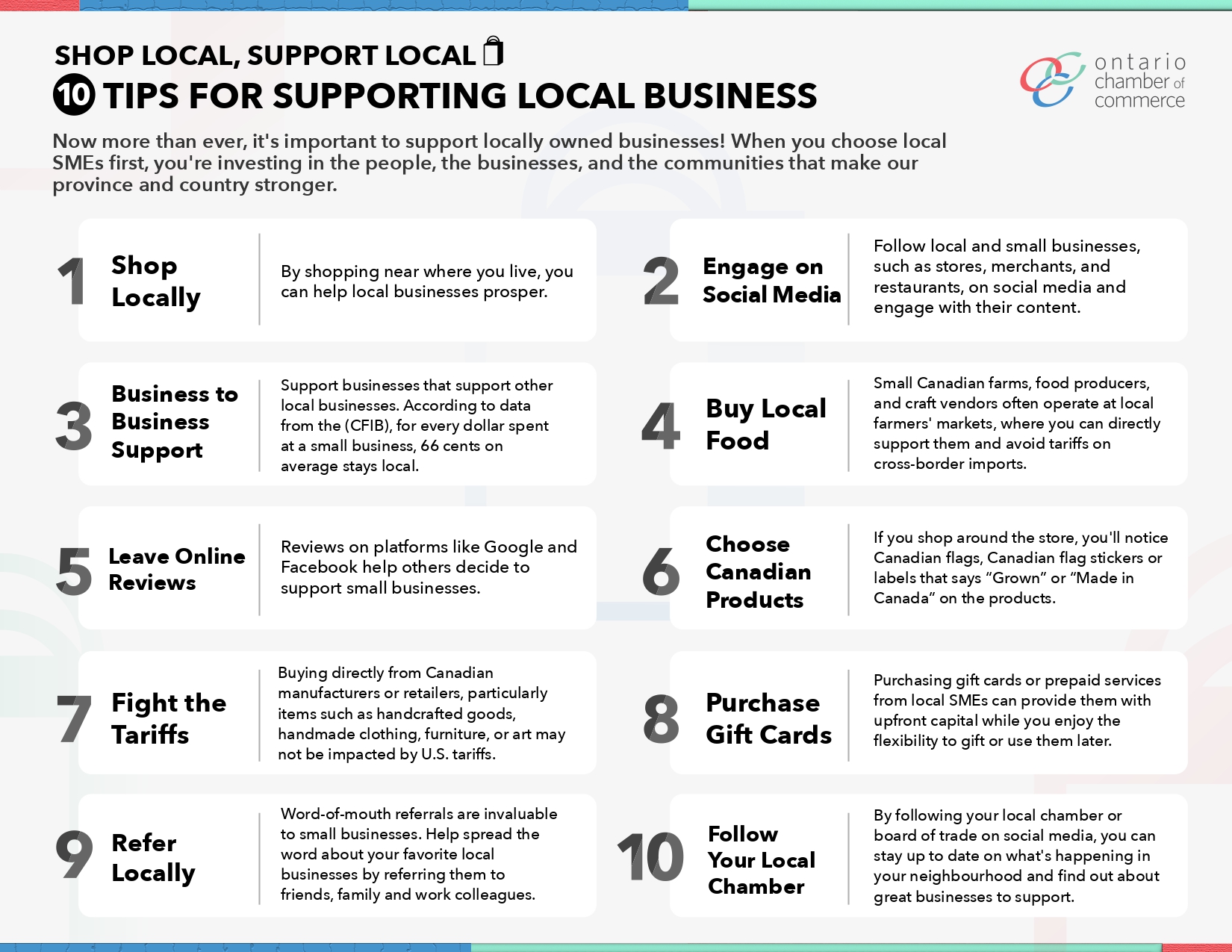
Resources and Tips to Stay Competitive and #ShopLocal