


Blog
Shifting the prevention paradigm from cost to investment
November 27, 2026Vaccination is one of the most effective tools available to help protect the health of Ontarians, and research has shown it can be an important contributor to the country’s economic prosperity. And yet, government investment in public health remains proportionally low relative to the overall healthcare spend in Ontario.
Consequently, even where the National Advisory Committee on Immunization (NACI) strongly recommends vaccination for adults, there remain gaps in publicly funded access. For example, public funding of shingles vaccination in Ontario is limited to adults age 65-70, despite a strong NACI recommendation that those aged 50 and older, as well as those aged 18 and older who are or will be immunocompromised, be vaccinated.
The case for prevention is particularly important for Ontarians living with chronic conditions. More than 60 per cent of Ontarians aged 65 and older live with at least two chronic conditions, including high rates of hypertension and ischemic heart disease. Evidence has also identified a bidirectional relationship between shingles and chronic disease, with cardiovascular disease associated with increased risk of shingles and shingles itself associated with an increased risk of cardiovascular events and stroke.
This discrepancy between evidence-based expert recommendations and public funding for vaccines may not only be impacting individual health considerations, it may also hinder productivity in Ontario.
In September 2026, Deloitte published a report analyzing Canada’s health-productivity gap and found that in 2025 alone, Canada sacrificed more than $100 billion in economic output related to illness preventing full participation in the workforce.
The report identifies a “prevention gap” in Canada, where our health systems remain focused on treating illness rather than upstream interventions, and this failure to shift health investments into upstream interventions are limiting untapped productivity opportunities.
While vaccines are well known for helping to protect individual health and support healthcare system resiliency, growing evidence shows immunization can also boost productivity. A recent report by Signal49 (formerly operating as the Conference Board of Canada) estimated that investing in shingles vaccination for Ontarians aged 50 years and older could generate $1.76 in health and productivity benefits for every dollar invested by the Ontario government. In addition to reducing healthcare costs, the analysis estimated approximately $620 million in productivity gains for the province.
Figure 1: Net productivity gains and returns on investment across Canada for Canadians 50 years and older
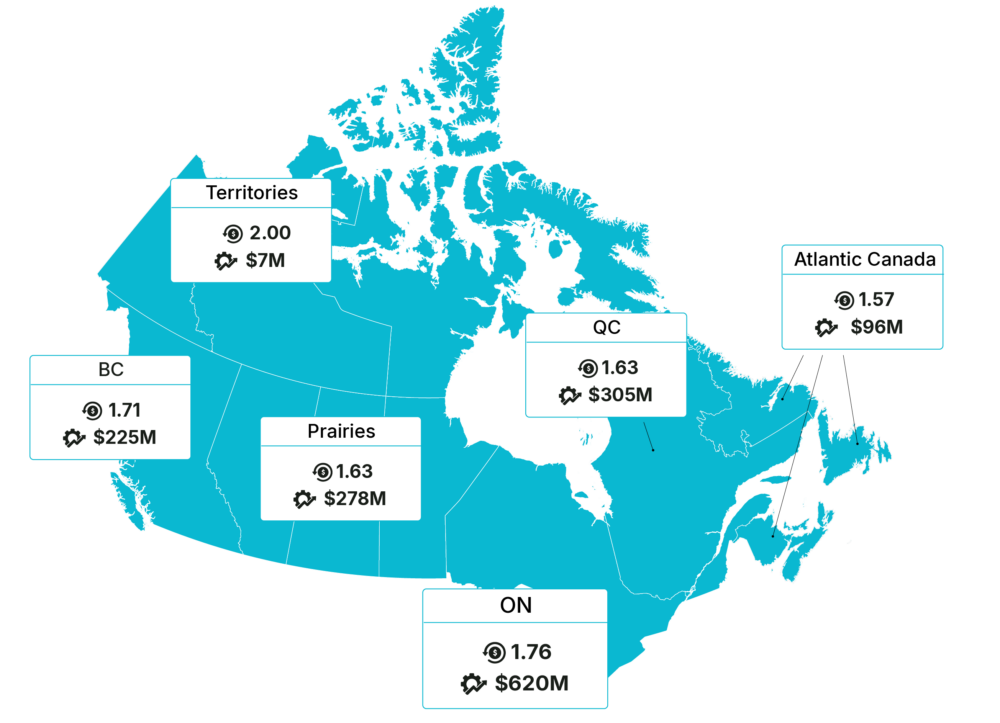
Source: The Value of Shingles Vaccination – Signal49 (reproduced with permission from Signal49)
Strengthening the case for increased investment in adult immunization, a recent poll conducted by Leger on behalf of biopharma company, GSK, revealed that Ontarians overwhelmingly support a prevention-first approach to healthcare:
- 93% of survey respondents believe the provincial government should fund vaccines that could help improve public health and alleviate pressure on the healthcare system
- 82% said they would be more likely to get an expert-recommended vaccine if it were publicly funded
- 78% cited healthy aging as a key reason for governments to invest in preventive healthcare and vaccination programs
As Ontario – and Canada – navigate ongoing geoeconomic uncertainty, shifting trade relationships, and international conflict, maintaining a healthy and productive population is increasingly important to economic resilience. As one of the most effective ways to keep adults healthy, immunization should be viewed as a strategic, long-term investment in the province’s health and economic prosperity.
Please note that the views and information presented in this blog are those of the author and do not necessarily reflect the views of the Ontario Chamber of Commerce (OCC).